
Modern eCOA Solution for Faster Studies
With our eCOA solution at the core, sponsors and CROs rely on uMotif’s scalable and configurable platform to deliver critical data capture.

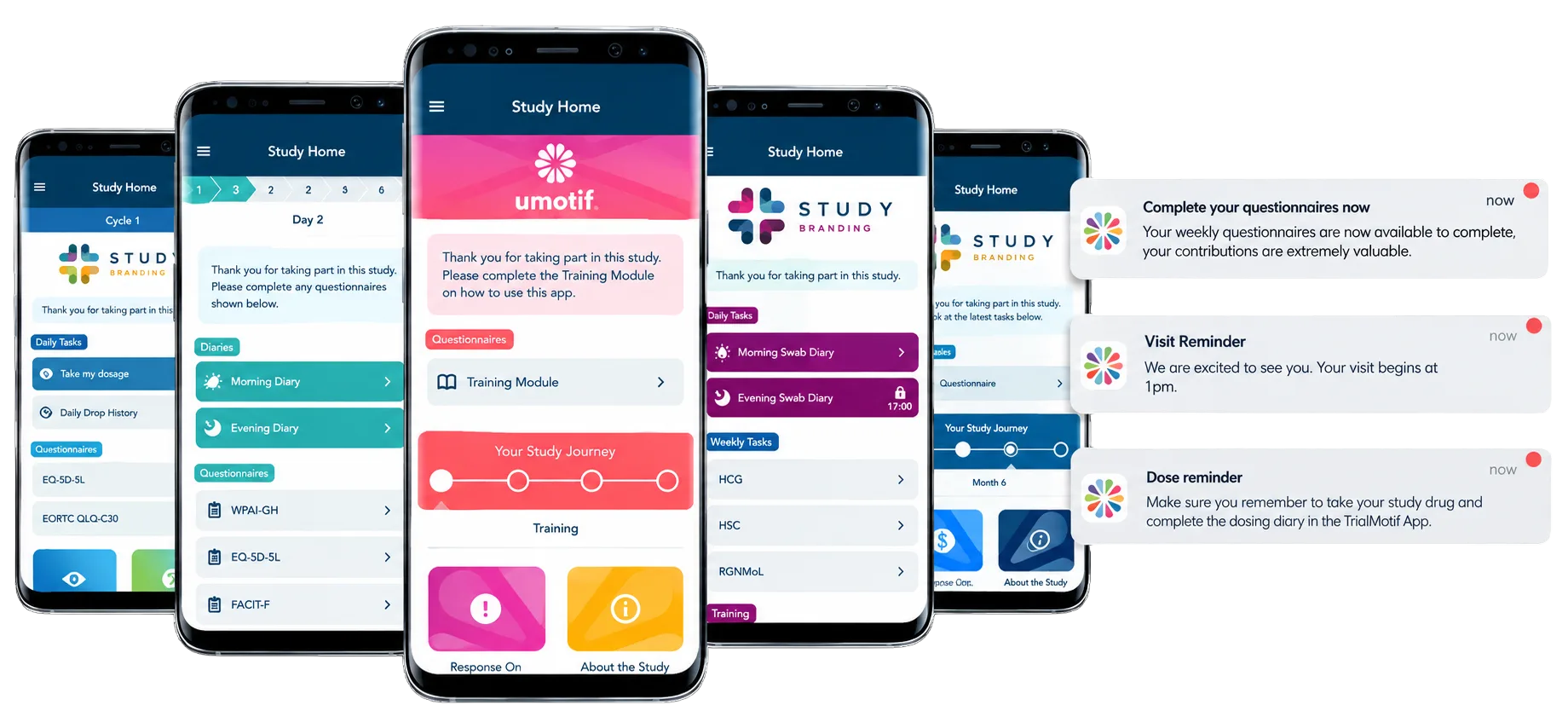
Other electronic clinical outcome assessments simply digitize paper forms; uMotif’s eCOA solutions are designed for patient centricity and more efficient, higher-quality trials. Our highly configurable, scalable platform combines intuitive user experience with behavioral science and seamlessly integrates ePRO, wearables, and real-world data to reduce site and patient burden.
We offer a modern, unified experience with >90% compliance rates in both clinical trials and real-world studies, delivering richer, more complete datasets faster.
Capture all types of eCOA data, on any device.
uMotif’s modern platform supports both app and web-based data capture using provisioned devices or bring your own device (BYOD), to quickly build and deploy any type of eCOA to support all your study needs:
- ePRO
- eClinRO
- eObsRO
- ePerfO
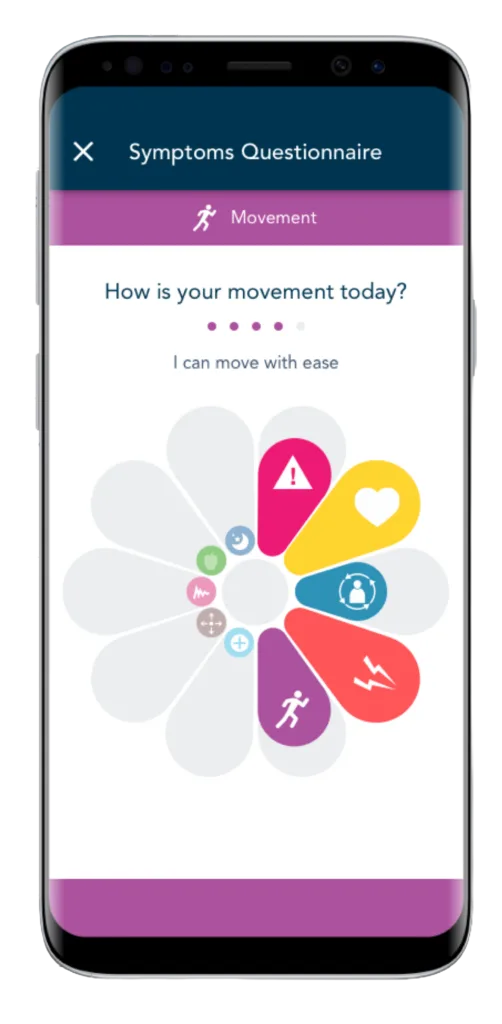
User-centric design for engaged participants.
uMotif’s simple, intuitive, and accessible interface allows participants (or their caregivers) and sites to integrate data capture seamlessly into their daily lives.
Our design approach isn’t just about what the user sees, but what happens behind the scenes. Support implementation of even the most complex protocols with uMotif’s flexible, adaptive scheduling and dynamic alerting to minimize user burden.

Unrivaled Compliance
uMotif’s patient-centric design combines with flexible alerts and reminders to reduce missing data and deliver high compliance.
Our eCOA solution regularly achieves >90% compliance in both clinical and real-world studies, helping sponsors and CROs run faster, more efficient studies.
Major Contender in eCOA Products
uMotif was recognized in the 2025 Everest Group Life Sciences eCOA Products PEAK Matrix® Assessment and named a Major Contender.
Enhanced Questionnaire Builder Tools.
Our eCOA questionnaire builder enables quick configuration of existing eCOAs, as well as bespoke questionnaires and home-grown eDiaries, with a built-in visual screen preview providing early visibility into screen design.
Linked to our library infrastructure, sponsor-specific repositories offer faster study build and deployment, designed to rapidly take studies from protocol to FPI.

Complex ClinROs and Audio Upload.
uMotif provides a robust, comprehensive system that takes a standardized approach to eClinRO administration while streamlining data capture for the rater. Role-based access control ensures the appropriate controls are in place so that the right raters have access to the right measures.
The uMotif system also supports audio upload of eClinRO administrations for quality review.

Sensors and Wearbles.
An extensible solution to quickly integrate sensors and wearables to capture more objective, real-time insights into participant functioning to support trial endpoints. Combining this data with electronic patient-reported outcomes (ePRO) offers a powerful picture of participant health.
The uMotif app can also house important training and support content/material on the set-up, use, and trouble-shooting of integrated digital health technologies (DHTs), ensuring help is always at hand.

Real-Time Data Insights.
Real-time recruitment, eligibility, eCOA compliance, and device reporting through a powerful web-based portal to make study management and oversight simpler, faster, and easier.

Underpinned by Scientific Excellence
Everything we do at uMotif is informed by science. Find out more about our specific scientific services below:
- Scientific Consulting
- Scale Management and Translations

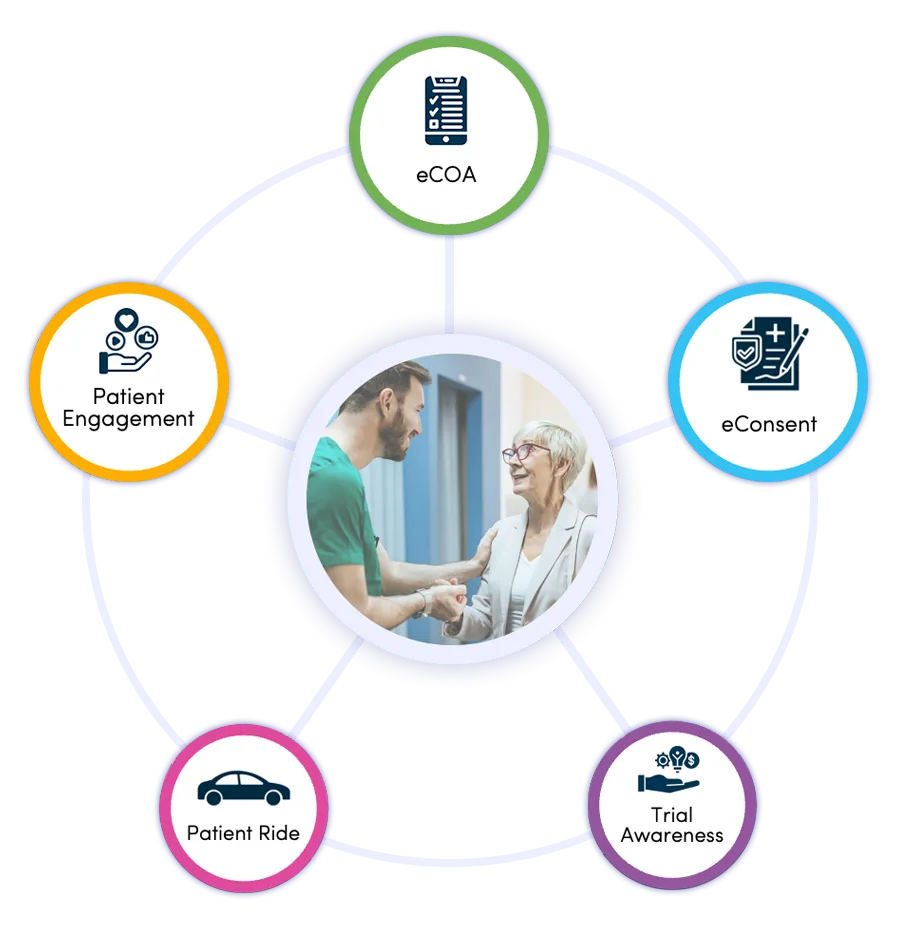
Additional Solutions in the uMotif Portfolio.
One platform, stronger participation, and stronger trials.
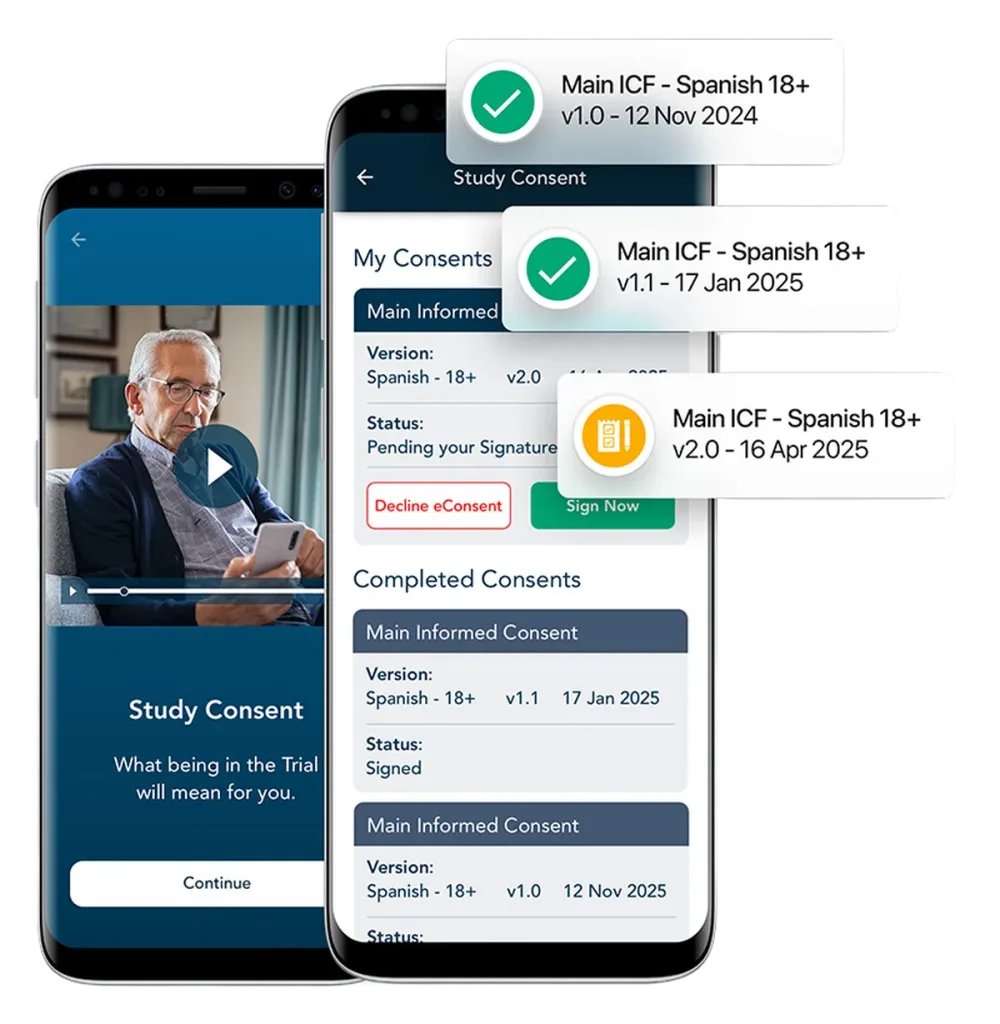
eConsent and Telehealth
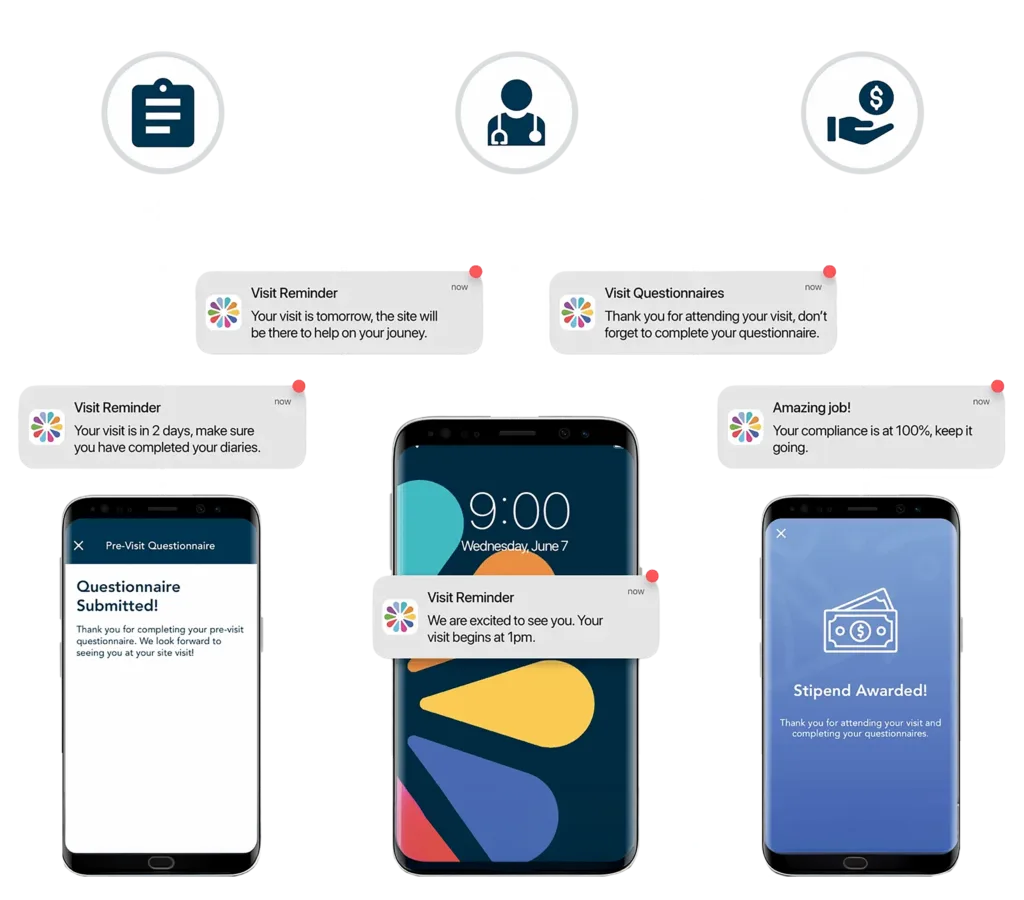
Patient Engagement
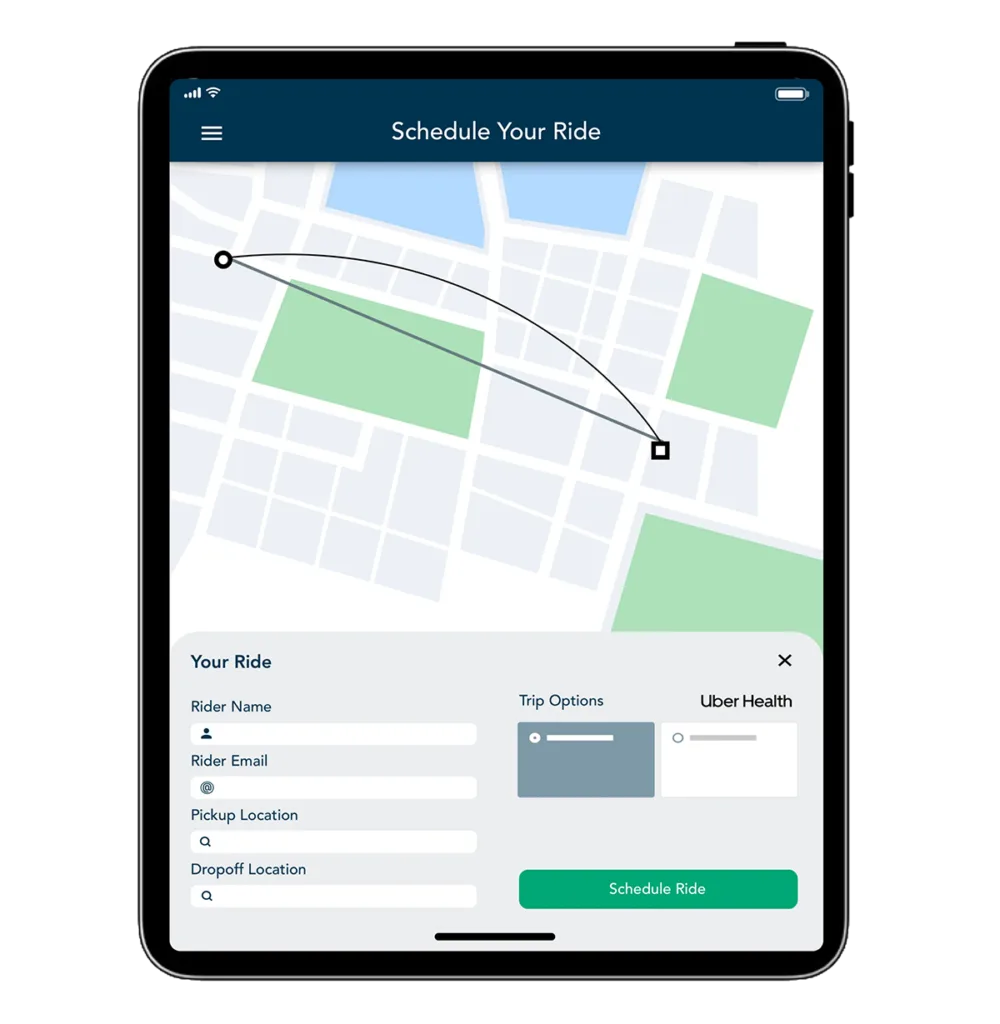
Patient Ride/Uber Health
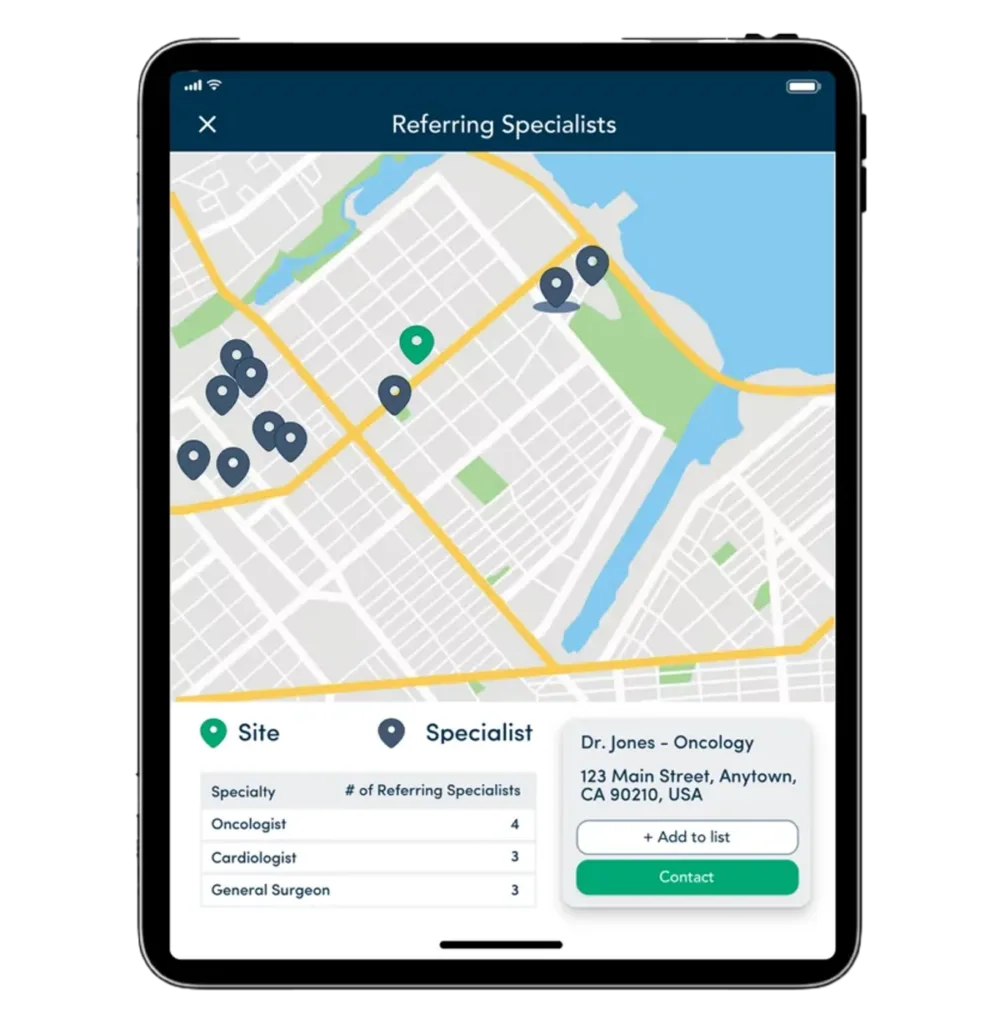
Trial Awareness
Integrations
-
Validated eCOA/ePRO Clinical Data Capture
-
Provisioned, BYOD, or Hybrid Device Approaches
-
24/7 Multi-Lingual Help Desk
-
GCP and 21 CFR Part 11 Compliant


-
Sensors and Data Tokenization
-
Mobile, Tablet, and Web Data Capture
-
All Languages Supported
-
IRT, EDC, and Data Lake Integrations


Frequently Asked Questions
Bring Your Own Device (BYOD) is where participants use their personal devices to complete assessments via apps or web portals. This approach can improve convenience, engagement, and compliance. While BYOD is often associated with remote data collection, it can also be implemented at study sites.
Historically, participants have been provisioned devices solely for the completion of data collection in clinical trials. However, in recent years there has been increased interest in taking advantage of the option for participants to use their own device (smartphone, tablet, laptop).
Yes, uMotif supports BYOD, and we actually find that most of our customers want to go with a BYOD first approach due to the benefits offered. We would always recommend that our customers also plan to have a percentage of provisioned devices available for use by study participants to ensure that participants who do not wish to use their own device or do not have a suitable device are still able to participate (and are not excluded from participating, creating bias in study findings).
uMotif can capture all types of eCOA.
eCOAs are grouped into four major categories – each designed to capture a different perspective of a patient’s experience.
- Electronic Clinician-Reported Outcomes (eClinROs) are measurements completed by a trained healthcare professional following direct observation, interview, or physical examination of a participant
- Electronic Patient-Reported Outcomes (ePROs) capture information directly from the patient – without interpretation from clinicians or caregivers, and are advised when measuring concepts best known by the patient themselves
- Electronic Observer Reported Outcomes (eObsRO) are reported by someone who regularly observes the patient – typically a parent or caregiver. They focuse only on observable behaviors or events, without medical judgment or interpretation
- Electronic Performance Outcome Measures (ePerfOs) are based on a standardized task that a patient performs, typically under structured conditions, and may be administered by an appropriately trained individual or completed by patient independently
As clinical trials continue to embrace digital transformation, electronic Clinical Outcome Assessments (eCOA) have emerged as a powerful solution to improve data quality, patient experience, and operational efficiency. Regulatory agencies like the FDA and EMA increasingly emphasize the importance of high-quality, reliable COA data.
The principles of ALCOA+ define what good-quality clinical data should look like:
Attributable, Legible, Contemporaneous, Original, Accurate, plus additional enhancements like Completeness and Consistency. Electronic capture supports each ALCOA+ principle more effectively than paper, improving data quality and integrity.
With eCOA, researchers can ensure entries occur at the correct time and detect compliance issues early, because data capture happens electronically with built-in timestamps and automated checks.
eCOA can also reduce burden for sites, CROs, and participants, and offer a clear return on investment in most cases.
eCOA systems fall under the same rules as any computerised system that collects clinical trial data. Globally, ICH E6(R3) Good Clinical Practice sets expectations for system validation, audit trails, access controls and investigator oversight of patient-reported data. In the US, 21 CFR Part 11 governs electronic records and signatures, supported by FDA guidance on electronic systems, digital health technologies and patient-reported outcomes. In the EU, the EMA Guideline on computerised systems and electronic data in clinical trials includes specific ePRO requirements, alongside the Clinical Trials Regulation and GDPR. This list is not exhaustive.