Skip to content
Case Studies
Dravet Syndrome
58 families capturing event-driven seizure eDiaries, with multiple caregivers contributing per patient
19,000+ seizure diary days recorded and almost 90% of core study ePRO data captured
Required data volume achieved 12 months ahead of schedule, saving the sponsor significant time and cost
Purpose-built eCOA Caregiver Module keeping every entry attributable to the caregiver who made it, with schedules aligned to the patient rather than the caregiver
Dermatology
40-month study with multiple caregivers per child logging sun exposure, symptoms, and attacks in real time
21,000+ diary days captured against an expected 19,000, exceeding the requirement by more than 1,900 days
Three interlinking diary types with distinct visual languages, built-in edit checks, and automatic sunrise and sunset lookup by location
eCOA designed and iterated directly with caregiver families, replacing a legacy tool that needed a 20-page paper manual
Diabetes
600 participants using their own smartphones, alongside sensor-derived readings from continuous glucose monitors
300+ eDiary Ecological Momentary Assessments over 10 weeks, contributing 250,000+ individual data points
99% retention and 90%+ overall data capture compliance, against 40% to 50% average dropout for real-world mHealth studies
Conducted as part of HYPO METRICS, a UK study funded through the EU Innovative Medicines Initiative (IMI)
Parkinson’s Disease
Multi-nation, fully decentralized Parkinson’s study conducted across 60+ countries
4,200+ participants using personal smartphones, tablets and wearable devices
2.2M+ data points captured, including 1.3M symptom scores and 7,600+ completed PRO questionnaires
Research collaboration with The Cure Parkinson’s Trust, Parkinson’s UK, EPDA, Boston Scientific, Cisco and UCB Pharma
Diabetes
10-week hypoglycemia study with 600 participants across the UK and Europe
Real-time patient-reported hypoglycemia data captured alongside CGM, sleep, quality of life and productivity measures
Most participants achieved >90% questionnaire compliance, with only 1% dropping out after the first week
Led by King’s College London as part of the EU Innovative Medicines Initiative-funded Hypo-RESOLVE project, with published research in BMJ Open and Diabetic Medicine
Rheumatic Fatigue
Fully remote rheumatic fatigue study combining uMotif eCOA/ePRO with dried blood spot sampling
30 days of daily symptom monitoring, including fatigue severity, pain, mood and coping
97.5% average weekly symptom reporting completion and 84% dried blood spot sample completion
Launched in eight weeks, with participants recruited and onboarded in two weeks
Glioblastoma
Patient-led glioblastoma research initiative designed to advance symptom tracking and data donation
Real-time reporting of sleep quality, exercise, mood, fatigue, quality of life and cognitive assessments
630 patients in the initial study, with a community growing to 1,000+
150,000+ data points captured, with most patients finding symptom tracking useful in managing GBM treatment
Rheumatoid Arthritis
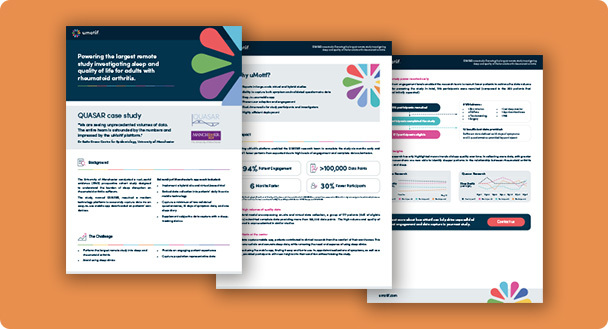
Largest remote study investigating sleep disruption and quality of life in adults with rheumatoid arthritis
Hybrid site and virtual model capturing validated questionnaires, symptom data, sleep diaries and sleep tracker data
Study completed six months early, requiring 30% fewer participants than expected
177 patients submitted complete data, generating 100,000+ data points and supporting published research in BMJ Open
Chronic Pain
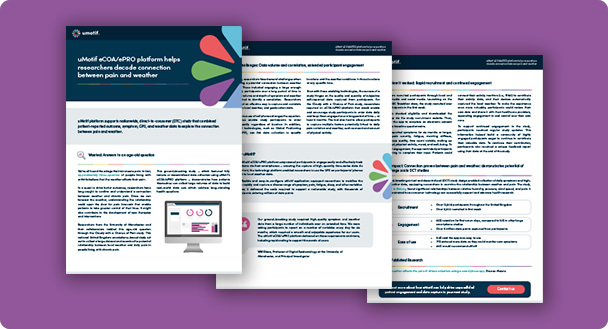
Nationwide UK smartphone study exploring the relationship between chronic pain and local weather
Daily patient-reported pain, fatigue, sleep, mood, activity, GPS and weather data captured for six months or longer
13,000+ participants recruited, including 6,000+ in the first week
5M+ data points captured, with results published in Nature and significant links found between pain, humidity, pressure and wind speed
Cardiac Rehabilitation
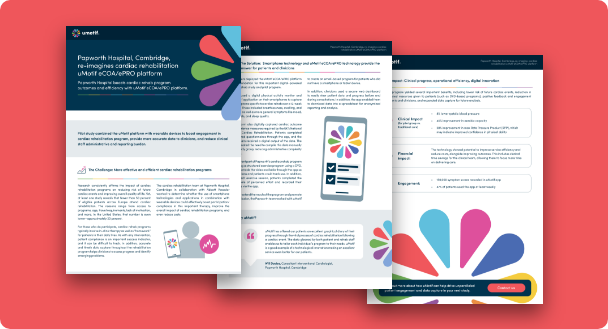
12-week cardiac rehab pilot combining uMotif eCOA/ePRO, smartphones and wearable activity monitors
Daily tracking of cardiac rehab symptoms, exercise effort, heart rate, mood, stress and sleep quality
40% improvement in aerobic capacity and 8% lower systolic blood pressure versus traditional care
150,000 symptom scores recorded, with digital reporting reducing manual admin for Papworth Hospital clinicians